

Build Stronger Growth with Proven Marketing Strategies
This guide highlights five effective channels that help small businesses expand reach, increase engagement, and achieve measurable results.
Introduction
5 Proven Channels for Small Business Growth
Strategic marketing is essential for small businesses in today’s competitive landscape. One channel can’t cut it. Varied content with targeted tactics that reinforce a brand is necessary.
This book explores five proven marketing channels that can support small business growth. Ranging from traditional radio ads to modern SEO, these channels help reach the right audience and strengthen overall marketing efforts.
Whether the business is new or established, this guide can take marketing to the next level. It provides helpful strategies to move forward, along with statistics to measure progress. With a local focus and a multi-channel approach, sustainable business growth is within reach.
Chapter 1

THE LOCAL MARKETING LANDSCAPE
Multi-channel marketing is twice as effective as a single-channel approach. Gone are the days of popping a sign in the window or placing an ad in the paper. Today’s audiences expect strong engagement across touchpoints. Companies that respond to this call for change enjoy many benefits.
Multi-channel marketing follows a customer through their whole journey. This strategy keeps you connected from the first introduction to the final purchase.
Small Business Marketing in a Growing World
Multi-channel marketing is twice as effective as a single-channel approach. Gone are the days of popping a sign in the window or placing an ad in the paper. Today’s audiences expect strong engagement across touchpoints. Companies that respond to this call for change enjoy many benefits.
Multi-channel marketing follows a customer through their whole journey. This strategy keeps you connected from the first introduction to the final purchase.
Optimizing the Small Business Budget
Small businesses often operate with limited time, money, and expertise. Worse still, they’re pitted against national brands with deep pockets, cutting-edge technology, and sophisticated tools. It’s easy for a small business to feel disadvantaged in a global pond. But there’s one prime perk local businesses can lean on: proximity. HubSpot asked marketers about recent changes in the marketing industry.[1] The top trend was a growing focus on customers and their experience. The second-largest change was an increase in content that reflected brand values. Small businesses are strong in both areas.
Although small businesses, by nature, have a smaller budget than large ones, they’re committed to putting their marketing money to work. Going into 2024, 39% of small businesses planned to increase their marketing budgets, with 46% planning to spend at least 10% more than they had in 2023.[2] Most small business owners agree that marketing is an essential investment. But many lack the time or knowledge to get great results. A well-crafted multi-channel marketing strategy optimizes your budget, streamlines activities, and improves outcomes.
What are the biggest ways the marketing industry has changed in the past year? (Top 5)

How is marketing budget changing?

39% of small businesses planned to increase their marketing budgets.
Emphasizing the Local Advantage
As a part of a niche neighborhood, you’re in a unique position to form genuine connections with customers. Small businesses can build relationships in a way that national ones cannot. To succeed in today’s marketing world, you must expand your reach. However, be cautious not to overextend your resources. The multi-channel mix can make that happen, but you need to know how to use it right. Sixty-two percent of small businesses always or consistently use more than one marketing channel in their campaigns.
[2] But only 16% feel confident that they’re doing it right.[2] It’s not about spreading your influence. You need to know where to direct your resources for the greatest impact. Small businesses often stick with the marketing channels they are most familiar with. Most identify email marketing or social media as their primary channels; rarely do they use both.[2] This approach leaves valuable markets untapped. Multi-channel marketing focuses on easy strategies. It aims to increase influence, boost brand recognition, and expand reach.
The Benefits of Multi-Channel Marketing
Branching into new marketing channels can feel daunting, especially when they’re unfamiliar. Thirty percent of small business owners admit having limited knowledge or experience with marketing channels outside their current mix.[2]
Understanding different channels can transform your campaigns. These routes offer access to untapped avenues for small business growth.
Not convinced yet? Here are some benefits of a multi-channel marketing mix.
Reaching More Customers
Multi-channel marketing broadens your reach. It connects with more potential clients. You don’t confine yourself to consumers who see your billboard on their daily drive. You can also reach those who take a different route but listen to the radio on the way. Add newsletter marketing or search engine optimization, and you’ll bridge physical barriers. Virtual marketing reaches people at any place where they have a computer or mobile device.
Increasing Customer Touchpoints
Customers interact with companies across an average of eight channels.[3] For many, this is no coincidence. Consumers prefer to buy from companies that they can reach in different ways. Seventy percent of consumers prefer to connect with a brand through multiple channels before making a purchase.[4]
Only a third of customers use a single channel for their shopping experience.[5] Most prefer to hop around. They use different methods to research, shop, and interact. If you’re only present on one channel, you’ll lose contact with customers when they switch to another. If you exist on multiple channels, you can stay in regular contact. This technique reinforces your branding with potential buyers.
Enriching Data Collection
When you’re collecting data well, multi-channel marketing offers a wealth of insights. It can help you identify which demographics are engaging on each channel. It provides insights into complete sales journeys.

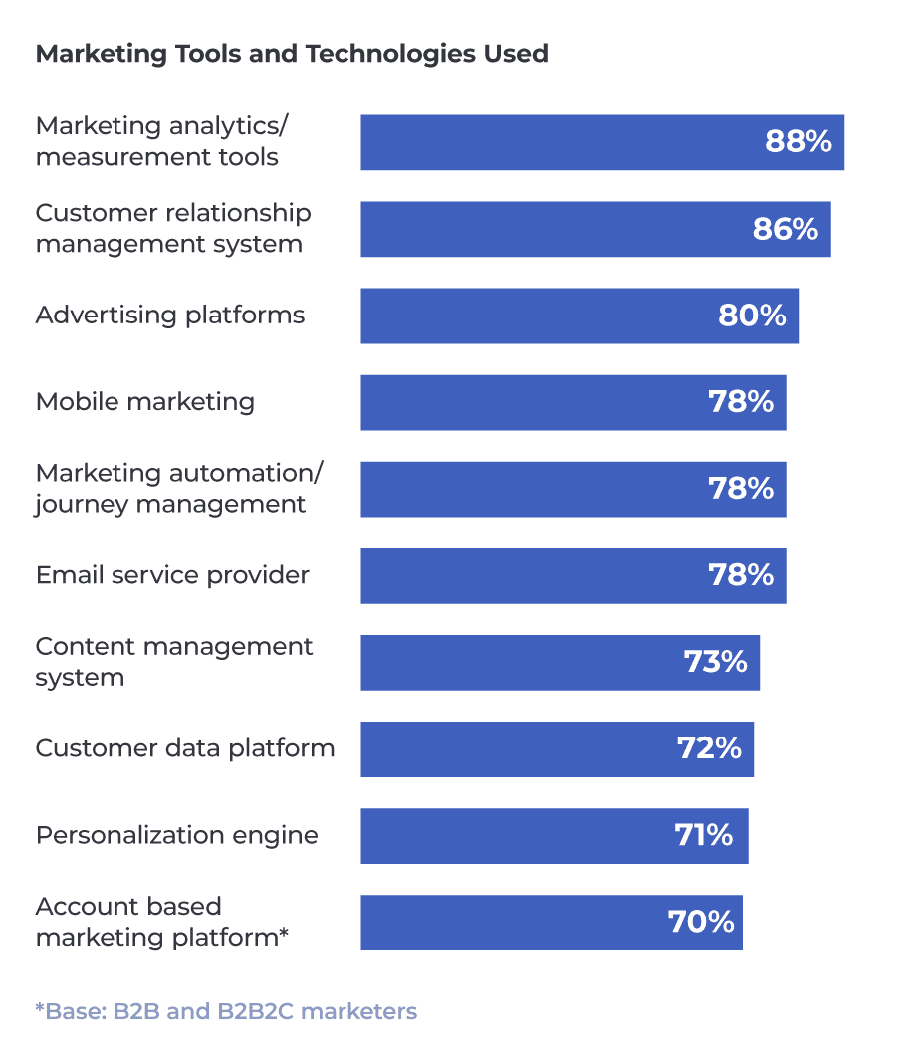
Marketers Use Diverse Tools To Fine-Tune Outreach and Measure Success
Customers interact with companies across an average of eight channels.
As you collect more data, you can optimize your marketing strategies. If you find that your billboards sell maintenance plans more effectively than installations, you can adjust your ads accordingly. Use data to sell the right services in the right place.
You can also gather data on various marketing campaigns. With a multi-channel approach, you can rely on your tried-and-true standards to continue performing effectively. This strategy holds the line while you experiment with new tactics.
You don’t have to risk everything on the only marketing avenue you have. Utilizing various channels provides you with greater flexibility and potential for creative growth.
Reinforcing Brand Messaging
Brand awareness is crucial throughout every stage of the sales funnel. Initial awareness can be the tipping point on the conversation scale. In one study, an incredible 82% of participants with a shopping-related research task chose a brand they were already familiar with.[6]
At the point of purchase, familiarity can be the tipping point between your brand and the next guy on the shelf. Familiarity was
so crucial in the previous study that some consumers would scroll to the eighth or ninth position on the search engine results page (SERP) for a product they were already familiar with.
Breaking it down, this means brand awareness can overcome lower search engine rankings. If customers know who you are, they’re likely to take the time to seek you out for a purchase. A single-channel approach that gets you to the top of the SERPs may still fall flat if no one knows your brand.
Improving Your ROI
Multi-channel consumers spend three times as much as single-channel customers.[7] A multi-channel approach helps build customer loyalty and encourages customers to spend more. With a single-channel approach, your returns are limited by the narrow reach of that lonely avenue.
Companies with a multi-channel marketing strategy see an average 9.5% increase in their annual revenue year-over-year. They also enjoy a 7.5% decrease in the cost per contact. These results translate to a steadily increasing ROI.[8]
Your Multichannel Marketing Cheat Sheet
Marketing across diverse media provides a wealth of benefits. A well-coordinated strategy optimizes these perks. Now that you understand the power of multi-channel marketing, it’s time to break it down to the basics. Remember, the key to successful marketing for a small business is simplicity. Think about it in terms of the CARE framework.
Keep cycling through the CARE framework. Use this foundation as you create, refine, and execute your marketing campaigns. These key strategies attract new customers while reinforcing your brand to your loyal supporters.
Capture Attention:
Utilize bold branding and concise messaging to make a lasting impression. Think billboards and local signage.
Articulate Value:
Demonstrate how you address local needs with customized solutions. Newsletters and SEO can provide a longer-form medium for your efforts.
Refine Your Presence:
Craft thoughtful campaigns that reinforce your presence. Consider radio spots and partnerships with local celebrities or influencers.
Expand Your Reach:
Explore new avenues for connecting with local audiences. Refine your retargeting and capture customers you may have missed on other channels.